Crochet Snake Keychain – Free Amigurumi Pattern
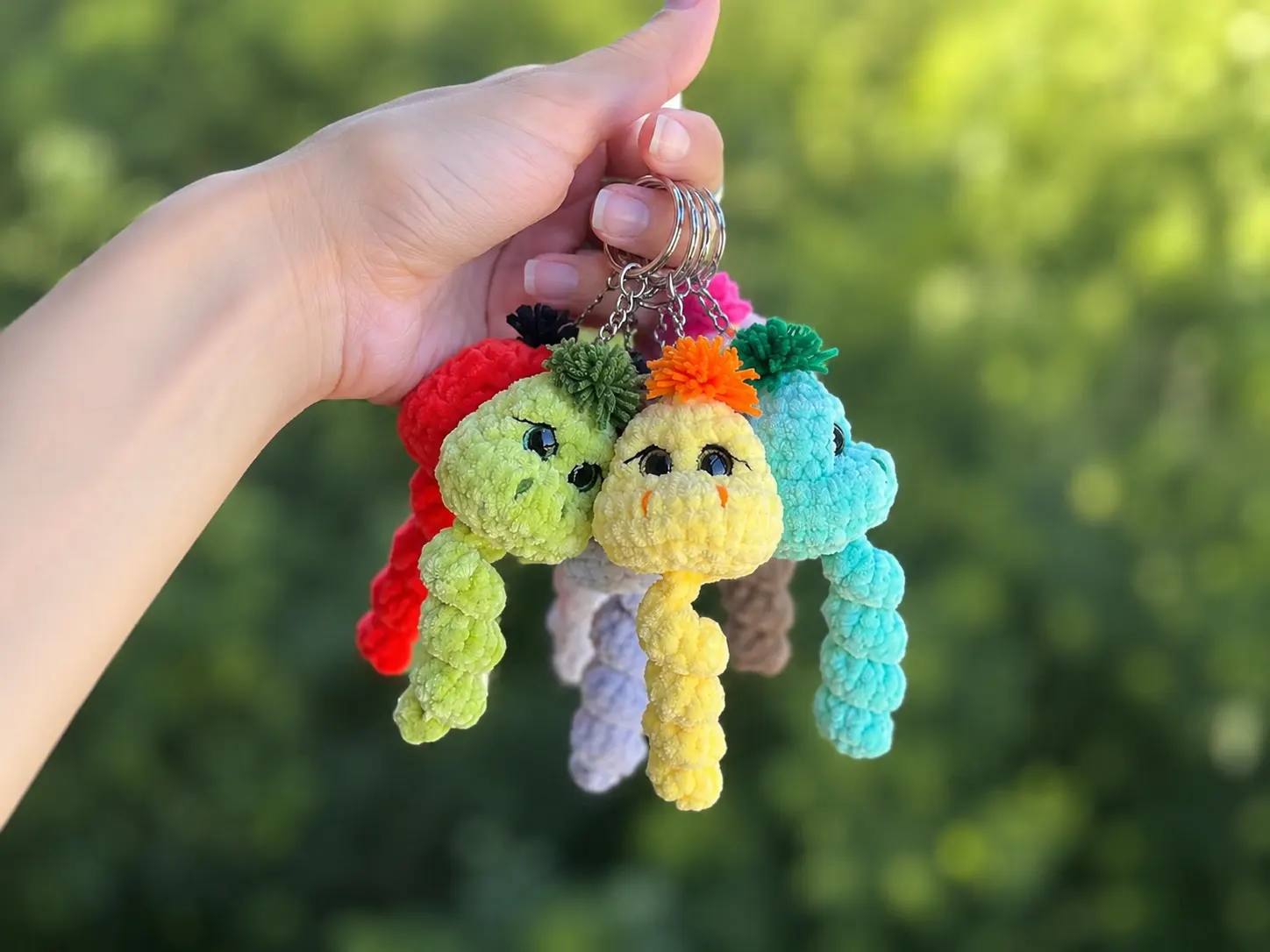
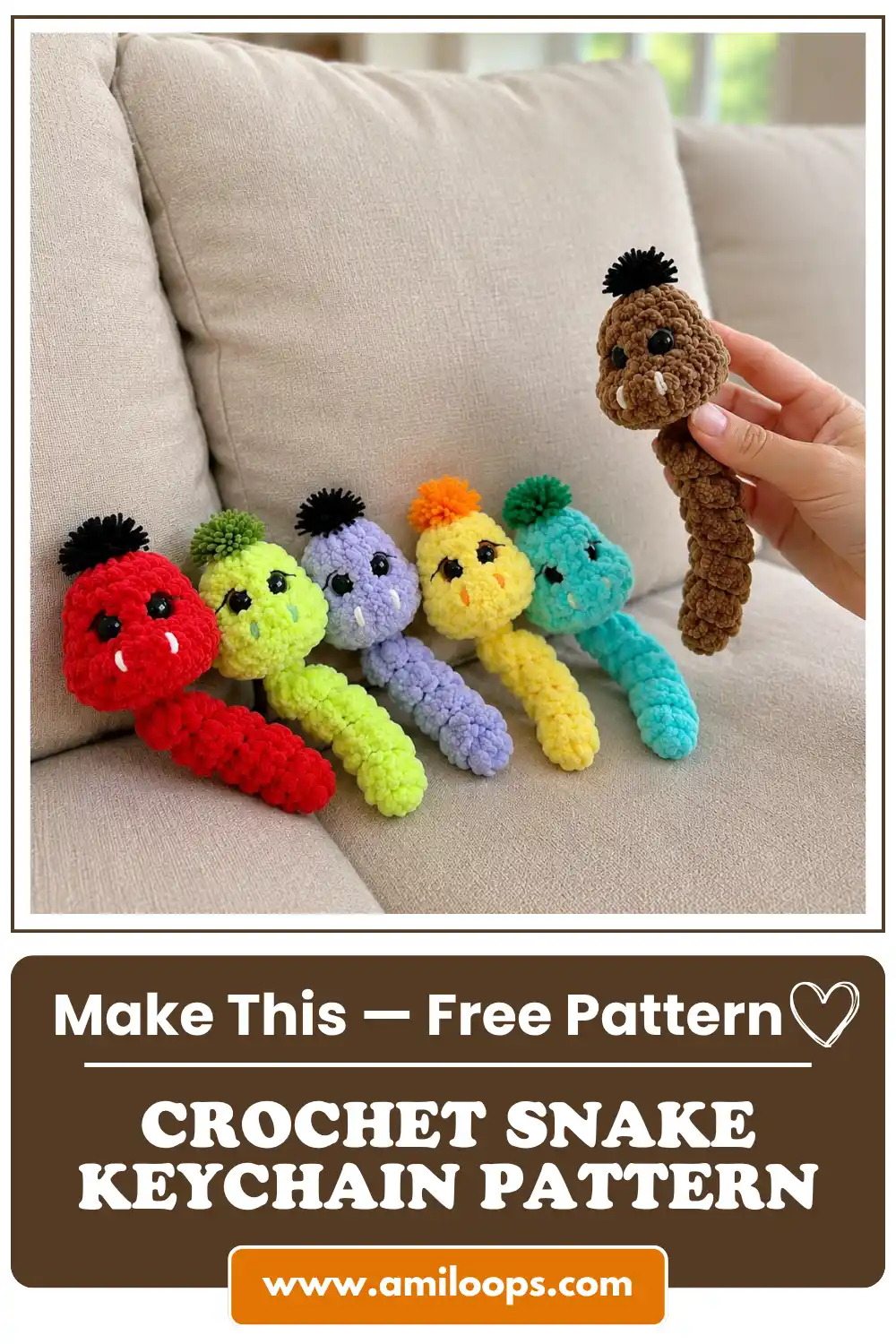
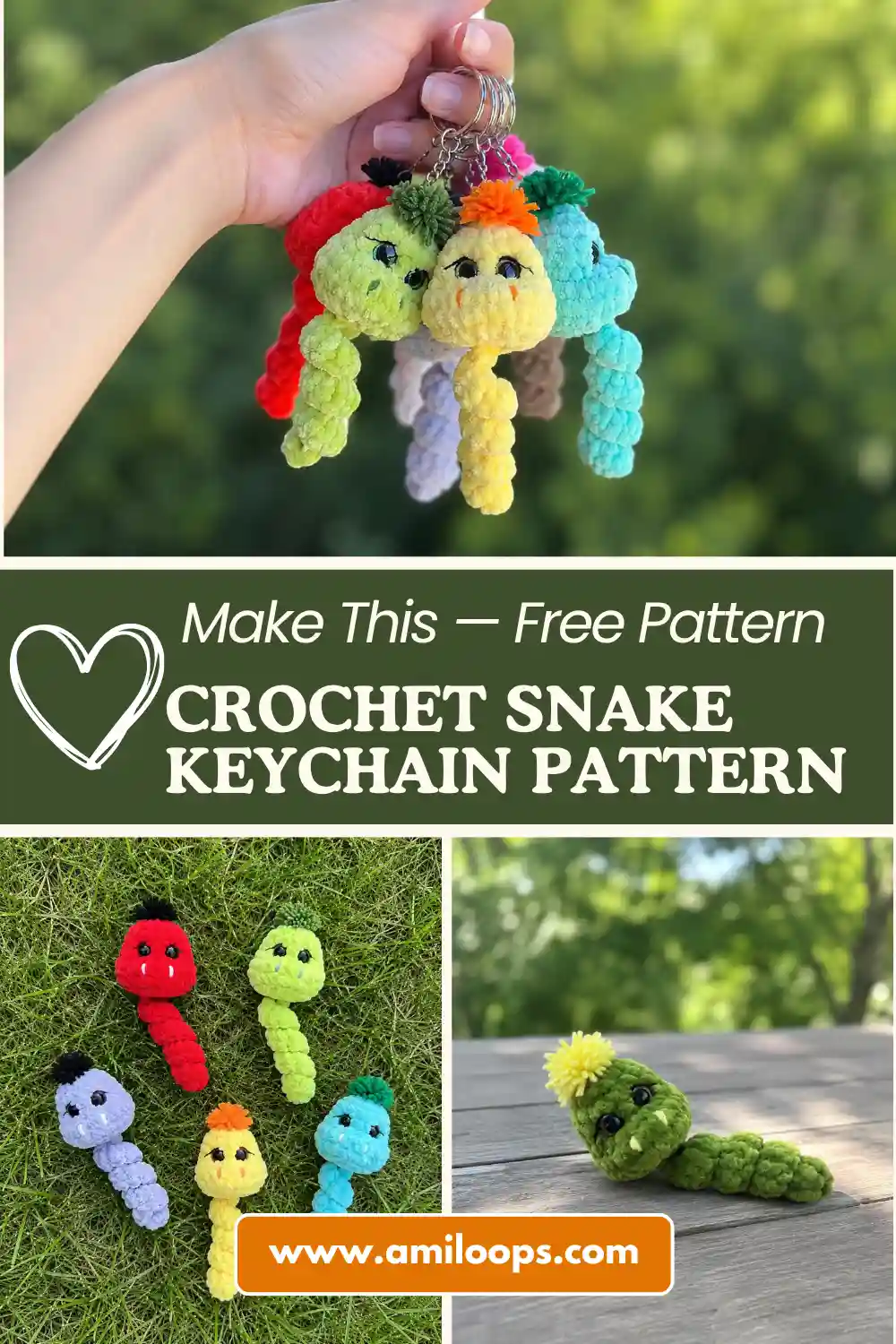
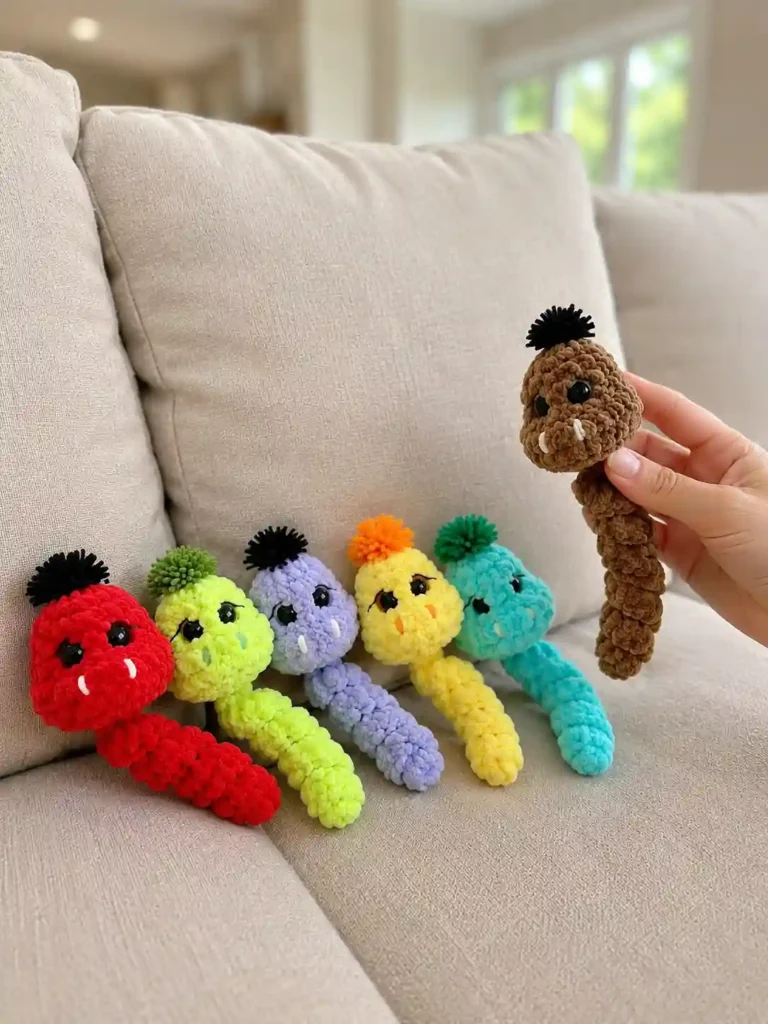
This crochet snake keychain pattern comes together from just two pieces: a rounded, stuffed head and a tail that spirals out from double crochet increases worked along a starting chain.
Chenille or plush yarn gives the finished piece its soft, fuzzy texture, and everything below is written in US crochet terms, with a keychain ring or clasp added at the end so it can clip onto a bag or keys.
Materials
To complete this crochet snake keychain pattern, gather the following supplies:
- Chenille/plush yarn, approx. 120m/100g (131 yd/3.5 oz)
- Crochet hook, 3.5mm or 4mm
- Cotton yarn/thread (for cinching the face, the forelock tuft, eyelashes, and nostrils)
- Polyester fiberfill (hollow-fiber or ball-style stuffing)
- 10mm safety eyes with sparkle
- Yarn needle (large eye)
- Scissors
- Keychain ring/clasp
Abbreviations Used
This pattern uses six standard US crochet abbreviations. For a full reference, see the Craft Yarn Council’s crochet abbreviations guide.
| Abbreviation | Meaning |
|---|---|
| MR | magic ring |
| inc | increase |
| sc | single crochet |
| dec | decrease |
| ch | chain |
| dc | double crochet |
Crochet Snake Keychain Pattern — Full Instructions
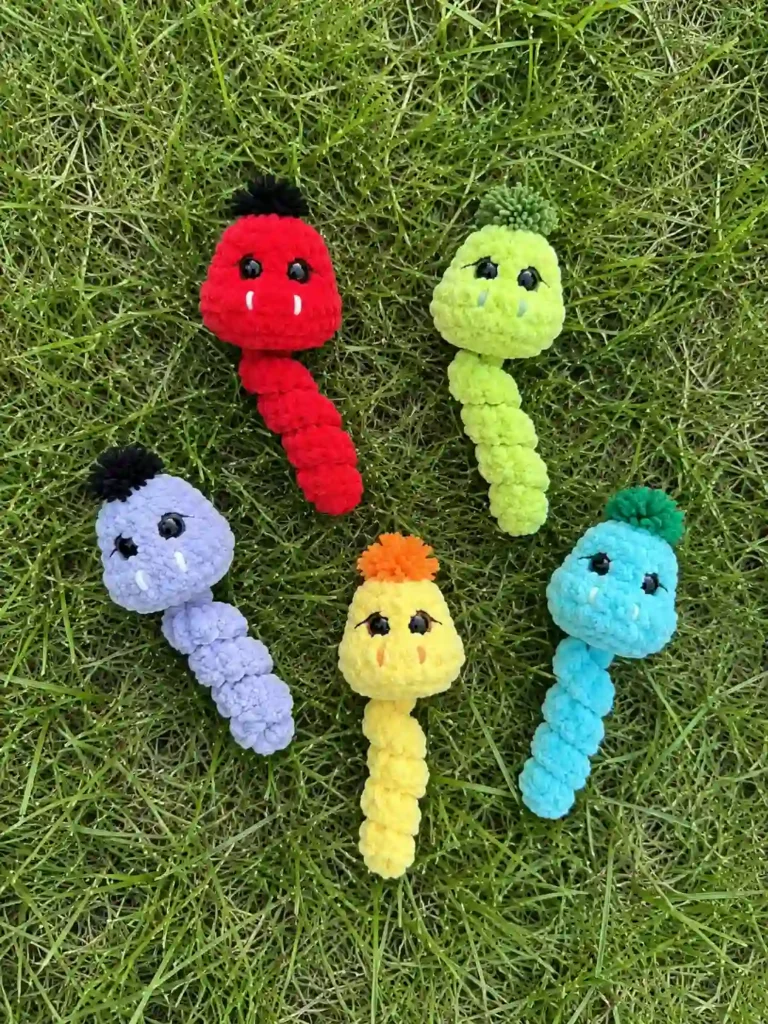
Head
Helpful note: Chenille yarn splits easily; if your stitches look loose, drop to the smaller hook size, and stuff the head firmly before closing each round for a rounder finish.
The head begins with a magic ring (MR). For a step-by-step refresher, this guide to using a magic ring in amigurumi covers the basic technique.
Rnd 1: 6 sc in magic ring. (6)
Rnd 2: 6 inc. (12)
Rnd 3: (1 sc, inc) x6. (18)
Rnds 4–5: 18 sc, 2 rnds. (18)
Rnd 6: 5 sc, 8 inc, 5 sc. (26)
Rnds 7–8: 26 sc, 2 rnds. (26)
Rnd 9: dec, (2 sc, dec) x6. (19)
Insert the safety eyes between Rounds 4–5, spaced 1–2 stitches apart and centered directly above the increases from Round 6. For tips on positioning and securing safety eyes, see this guide to attaching safety eyes.
Helpful note: No safety eyes on hand? French-knot eyes work too — just place them between Rounds 4–5 as described.
Begin stuffing the head.
Rnd 10: 1 sc, (1 sc, dec) x6. (13)
Finish stuffing the head firmly before working the final rounds. This guide to stuffing amigurumi has more on getting an even, firm fill.
Rnd 11: 1 sc, 6 dec. (7)
Fasten off, cinch the remaining stitches closed, and weave in the end.
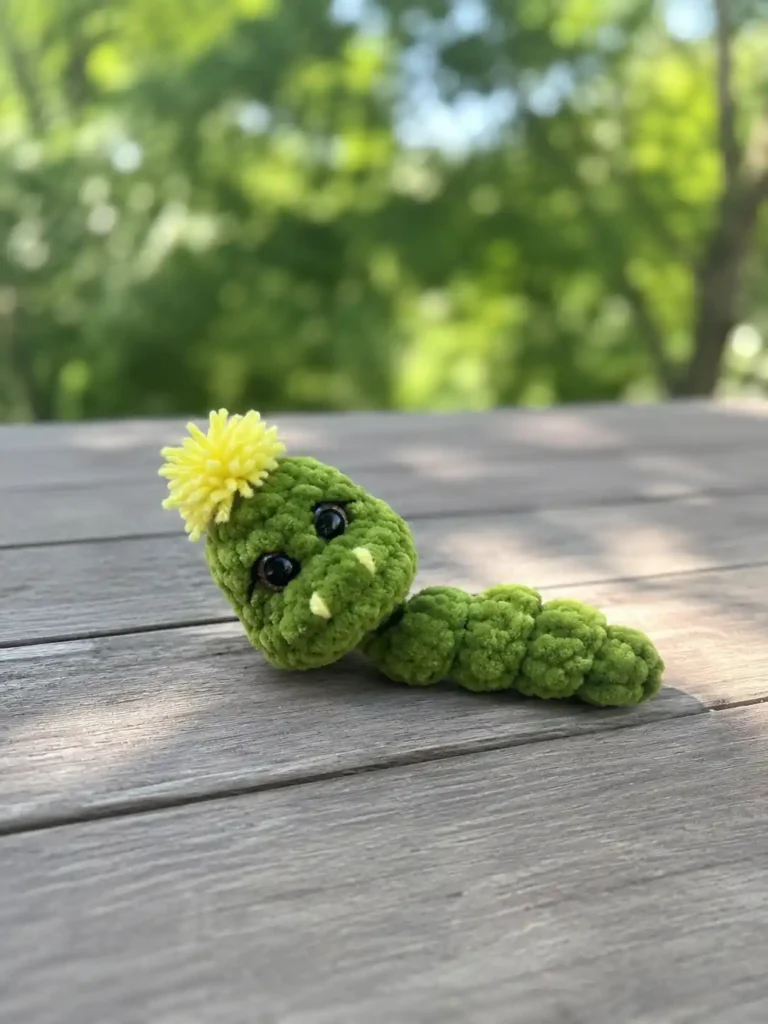
Tail
Chain 20. Starting in the 2nd chain from hook, work 1 sc, then 18 dc increases (2 dc worked in each of the remaining 18 chains).
Sew the tail to the underside of the head.
Helpful note: The tail’s curl comes naturally from working double crochet increases along a starting chain rather than in rounds — keep your tension even for a consistent spiral.
Assembly and Finishing
With cotton thread that matches the plush yarn, follow the pattern’s point sequence: insert the needle at point 1 and bring it out at point 2, then insert at point 3 and bring it out at point 4, making one pass under each eye. Pull gently to shape the face, then secure with a few knots. For a deeper indent, repeat the sequence once more.
Embroider the eyelashes and nostrils with cotton thread.
For the forelock tuft, wrap cotton thread around three fingers about 25 times, then tie tightly around the center several times. Cut the loops open, trim the tuft round, and sew it to the top of the head.
Once the forelock is trimmed to shape and the tail is secure, attach your keychain ring or clasp and the snake is ready to carry along.
Your crochet snake keychain pattern is now complete, and your new amigurumi companion is ready to be used every day.
Care Instructions If your finished amigurumi gets dirty from everyday use, spot clean it gently with a damp cloth and mild soap. Avoid machine washing, as the chenille yarn can lose its fuzzy texture and the polyester fiberfill stuffing may clump, permanently altering the shape of your keychain.
FAQ
What is the best yarn for this crochet snake keychain pattern?
Chenille or plush yarn is highly recommended for this pattern, as it gives the finished snake keychain its signature soft and fuzzy texture.
Can beginners make this amigurumi snake?
Yes, this pattern requires only basic stitches and consists of just two simple parts (head and tail), though absolute beginners should be mindful that chenille yarn can split easily.
How does the snake’s tail curl naturally?
The curly tail is created by working double crochet increases sequentially along a starting chain, which naturally forces the fabric to spiral.